 http://www.savagechickens.com/images/chickensuckage.jpg
 http://i.pgcdn.com/muze_images/books/7/01/9780471189701_150x150.jpg
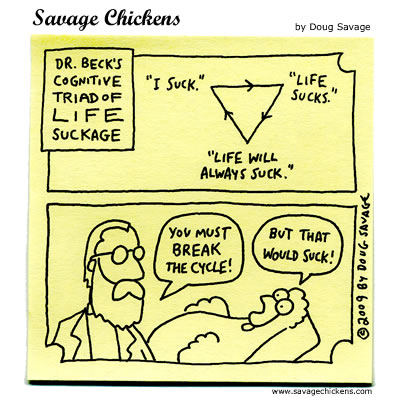
The Cognitive Theory of depression states that depression's outcome from faulty, maladaptive or irrational cognitions taking the shape of distorted thoughts and accusations. Depressive cognitions can be understood and applied socially, through observing. For example the case when kids in a dysfunctinal family watch their parents fail to successfully cope with strressful experiences and other difficult, traumatic sucessions. In the other hand, depressive cognitions may also come out from a lack of experiences that would make it easier to the development of adaptation to coping abilities.
Well, according to the cognitive theory of depression, the depressed persons think very differently from those that aer'nt depressed. This difference in thinking and judgement causes these people to become more depressed. For instance, people with depression symptoms tend to look at themselves , their surroundings, environment and their future in a very pessimistic and negative way. As an outcome, people who are depressed are inclined to misunderstand things in pessimistic forms and then they blame themselves for any little or big misfortune they go through. Overall, this negative way of perception and judgement works as a negative bias, therefore making it easier for depressed people to look at events as them being much worse than what they really seem to be for the rest of the people. This also increases the risk that depressed individuals will develop depressive symptoms in result to very stressful and frustrating situations people face.


No comments:
Post a Comment